

Starring
Freddie Bartholomew
Mickey Rooney
Delores Costello Barrymore
C. Aubrey Smith
Guy Kibbee
Jessie Ralph
and
Henry Stephenson
To day let’s continue to talk Classic Movie Child Star – Freddie Bartholomew. Yesterday we talked about the movie that set Bartholomew’s child filmdom in Hollywood soaring, David Copperfield. Today we would like to highli
 ght one of his most popular roles as a child in a “rags to riches” story, Little Lord Fauntleroy, where an American boy turns out to be the long-lost heir of a British fortune. Directed by John Cromwell, Little Lord Fauntleroy was based on a novel by Frances Hodgson Burnett of the same name. It is a very heart-warming story headed by a wonderful cast, Freddie Bartholomew, Delores Costello Barrymore, C. Aubrey Smith, Guy Kibbee, Mickey Rooney, Jessie Ralph, Henry Stephenson, Constance Collier, a
 nd E. E. Clive. Set in the late 19th century, this David O. Selznick masterpiece brings Burnett's classic literary tale to life with a refreshing flair.
Young Cedric Errol (Bartholomew) and his widowed mother, whom he calls "Dearest" (Barrymore), struggle to make ends meet in 1880s Brooklyn after the death of Cedric’s English father. Cedric's grandfather, the Earl of Dorincourt (Smith), had disowned Cedric's father when he married an American. But when the Earl's remaining son dies, he accepts Cedric as Lord Fauntleroy, his heir, and the Earl sends for Cedric and his mother. British lawyer Mr. Havisham (Stephenson) has come to America by order of Cedric's grandfather. Mr. Havisham explains that young Cedric is now the only living heir to his British grandfather's title and estates. Mrs. Errol reluctantly agrees to bring Cedric to Britain since her husband, the late Captain Errol, would have wished it! Mr. Havisham gives Cedric money as a gift from his grandfather and Cedric immediately concludes, "My grandfather must be a very good man!" The new Lord Fauntleroy now goes out to say goodbye and to bring gifts to his friends, Dick Tipton (Rooney), whose new shoeshine stand is from Cedric, Mr.
 Hobbs (Kibbee), who gets a new pipe and engraved watch, and the Apple Woman (Ralph), who wears a warm new shawl from Cedric. Cedric then heads to England.
Mr. Havisham warns Mrs. Errol that the old Earl does not wish to see her as he is quite prejudiced against Americans and is fixed in his determination not to see her. She, thus, cannot enter the Dorincourt Estates, but must live in a home nearby where Cedric can visit. Distressed Mrs. Errol accepts the home, but refuses the money offered with the house, as she has a small income of her own. Mrs. Errol also asks that Mr. Havisham not tell Cedric why she must live apart because it would make it harder for Cedric and his grandfather to be friends. Mr. Havisham assures her that Cedric will thank her for her that someday. At Dorincourt Castle, the Earl throws a lavish party to introduce Cedric, the new Lord Fauntleroy, to society. The Earl's younger sister, Lady Constantia (Collier) and her husband Sir Harry Lorridaile (Clive) are delighted to meet their grand-nephew Cedric. She tells Cedric "I loved your father more than most people in this wicked world!"
Cedric, unlike his cold and unsentimental grandfather, is a kind-hearted soul who alwa ys tries to see the good in others and truly has the desire to help the people of Dorincourt. He sees the poverty and misery that the people are suffering and uses his position as a lord to make living conditions better for the people, who are not used to such kindness. Cedric wins the hearts of all the people, including his grandfather. He proves that he is very worthy of his title. The crusty Earl is impressed by the appearance and intelligence of his young American grandson, and charmed by his innocent nature. Cedric, a trusting child, believes his noble grandfather to be a great benefactor, and the Earl cannot bear to disappoint his loving grandson. Thus, the Earl acts as a benefactor to his tenants.

When the Earl’s eldest son’s former wife, Minna (Helen Flint), comes forward claiming that her son is the rightful heir, the Earl becomes angry that Cedric’s title is now threatened. Because the Earl has become very fond of Cedric and knows that Cedric will do good for the people, he is grieved that this other heir will take Cedric’s place. Good news! It is discovered that the boy’s birth certificate had been forged and that Minna is a fraud. Cedric will remain Lord Fauntleroy and the Earl has a change of heart regarding Mrs. Errol. He asks her for forgiveness and surprises Cedric with a birthday present of allowing her to move into Dorinco urt Castle. "She's come to live with us...We've always wanted her," the Earl admits..."We just weren't aware of it!" The Earl had intended to teach his grandson how to be an aristocrat; however, Cedric inadvertently teaches his grandfather that an aristocrat should practice compassion towards persons who are dependent on him. The Earl becomes the kind and good man Cedric always innocently believed him to be.
There have been several versions of Little Lord Fauntleroy made throughou t the years. We highly recommend the 1936 film with Freddie Bartholomew as Little Lord Fauntleroy. This is our favorite and arguably the best-known adaptation. Read “Let’s Talk Classic Movies” every Monday, Wednesday, and Friday for more movie presentations and trivia.
**Trivia Question for Today: What item does the Earl of Dorincourt ‘take off occasionally’ according to a conversation he has with Cedric in Little Lord Fauntleroy?
Trivia Answer for Previous Post: The American child actor David Holt had original ly been cast as the title character in The Personal History, Adventures, Experience, & Observation of David Copperfield the Younger (1935). But the film's producer, David O. Selznick, developed misgivings about having an American boy portray a quintessentially British boy. He replaced Holt with Bartholomew.
 day let’s continue to talk Classic Movie Child Star – Freddie Bartholomew. Yesterday we talked about the movie that set Bartholomew’s child filmdom in Hollywood soaring, David Copperfield. Today we would like to highli
 ght one of his most popular roles as a child in a “rags to riches” story, Little Lord Fauntleroy, where an American boy turns out to be the long-lost heir of a British fortune. Directed by John Cromwell, Little Lord Fauntleroy was based on a novel by Frances Hodgson Burnett of the same name. It is a very heart-warming story headed by a wonderful cast, Freddie Bartholomew, Delores Costello Barrymore, C. Aubrey Smith, Guy Kibbee, Mickey Rooney, Jessie Ralph, Henry Stephenson, Constance Collier, a
 nd E. E. Clive. Set in the late 19th century, this David O. Selznick masterpiece brings Burnett's classic literary tale to life with a refreshing flair.
Young Cedric Errol (Bartholomew) and his widowed mother, whom he calls "Dearest" (Barrymore), struggle to make ends meet in 1880s Brooklyn after the death of Cedric’s English father. Cedric's grandfather, the Earl of Dorincourt (Smith), had disowned Cedric's father when he married an American. But when the Earl's remaining son dies, he accepts Cedric as Lord Fauntleroy, his heir, and the Earl
 sends for Cedric and his mother. British lawyer Mr. Havisham (Stephenson) has come to America by order of Cedric's grandfather. Mr. Havisham explains that young Cedric is now the only living heir to his British grandfather's title and estates. Mrs. Errol reluctantly agrees to bring Cedric to Britain since her husband, the late Captain Errol, would have wished it! Mr. Havisham gives Cedric money as a gift from his grandfather and Cedric immediately concludes, "My grandfather must be a very good man!" The new Lord Fauntleroy now goes out to say goodbye and to bring gifts to his friends, Dick Tipton (Rooney), whose new shoeshine stand is from Cedric, Mr.
 Hobbs (Kibbee), who gets a new pipe and engraved watch, and the Apple Woman (Ralph), who wears a warm new shawl from Cedric. Cedric then heads to England.
Mr. Havisham warns Mrs. Errol that the old Earl does not wish to see her as he is quite prejudiced against Americans and is fixed in his determination not to see her. She, thus, cannot enter the Dorincourt Estates, but must live in a home nearby where Cedric can visit. Distressed Mrs. Errol accepts the home, but refuses the money offered with the house, as she has a small income of her own. Mrs. Errol
 also asks that Mr. Havisham not tell Cedric why she must live apart because it would make it harder for Cedric and his grandfather to be friends. Mr. Havisham assures her that Cedric will thank her for her that someday. At Dorincourt Castle, the Earl throws a lavish party to introduce Cedric, the new Lord Fauntleroy, to society. The Earl's younger sister, Lady Constantia (Collier) and her husband Sir Harry Lorridaile (Clive) are delighted to meet their grand-nephew Cedric. She tells Cedric "I loved your father more than most people in this wicked world!"
Cedric, unlike his cold and unsentimental grandfather, is a kind-hearted soul who alwa
 ys tries to see the good in others and truly has the desire to help the people of Dorincourt. He sees the poverty and misery that the people are suffering and uses his position as a lord to make living conditions better for the people, who are not used to such kindness. Cedric wins the hearts of all the people, including his grandfather. He proves that he is very worthy of his title. The crusty Earl is impressed by the appearance and intelligence of his young American grandson, and charmed by his innocent nature. Cedric, a trusting child, believes his noble grandfather to be a great benefactor, and the Earl cannot bear to disappoint his loving grandson. Thus, the Earl acts as a benefactor to his tenants.

When the Earl’s eldest son’s former wife, Minna (Helen Flint), comes forward claiming that her son is the rightful heir, the Earl becomes angry that Cedric’s title is now threatened. Because the Earl has become very fond of Cedric and knows that Cedric will do good for the people, he is grieved that this other heir will take Cedric’s place. Good news! It is discovered that the boy’s birth certificate had been forged and that Minna is a fraud. Cedric will remain Lord Fauntleroy and the Earl has a change of heart regarding Mrs. Errol. He asks her for forgiveness and surprises Cedric with a birthday present of allowing her to move into Dorinco
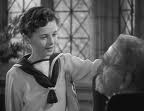 urt Castle. "She's come to live with us...We've always wanted her," the Earl admits..."We just weren't aware of it!" The Earl had intended to teach his grandson how to be an aristocrat; however, Cedric inadvertently teaches his grandfather that an aristocrat should practice compassion towards persons who are dependent on him. The Earl becomes the kind and good man Cedric always innocently believed him to be.
There have been several versions of Little Lord Fauntleroy made throughou
 t the years. We highly recommend the 1936 film with Freddie Bartholomew as Little Lord Fauntleroy. This is our favorite and arguably the best-known adaptation. Read “Let’s Talk Classic Movies” every Monday, Wednesday, and Friday for more movie presentations and trivia.
**Trivia Question for Today: What item does the Earl of Dorincourt ‘take off occasionally’ according to a conversation he has with Cedric in Little Lord Fauntleroy?
Trivia Answer for Previous Post: The American child actor David Holt had original
 ly been cast as the title character in The Personal History, Adventures, Experience, & Observation of David Copperfield the Younger (1935). But the film's producer, David O. Selznick, developed misgivings about having an American boy portray a quintessentially British boy. He replaced Holt with Bartholomew.


